Canada Tightens Language Test Verification for Immigration: What IELTS and CELPIP Test Takers Need to Know
Published: June 2026
If you're planning to move to Canada through Express Entry, a Provincial Nominee Program (PNP), or you're applying for a Post-Graduation Work Permit (PGWP), there's an important update you shouldn't ignore.
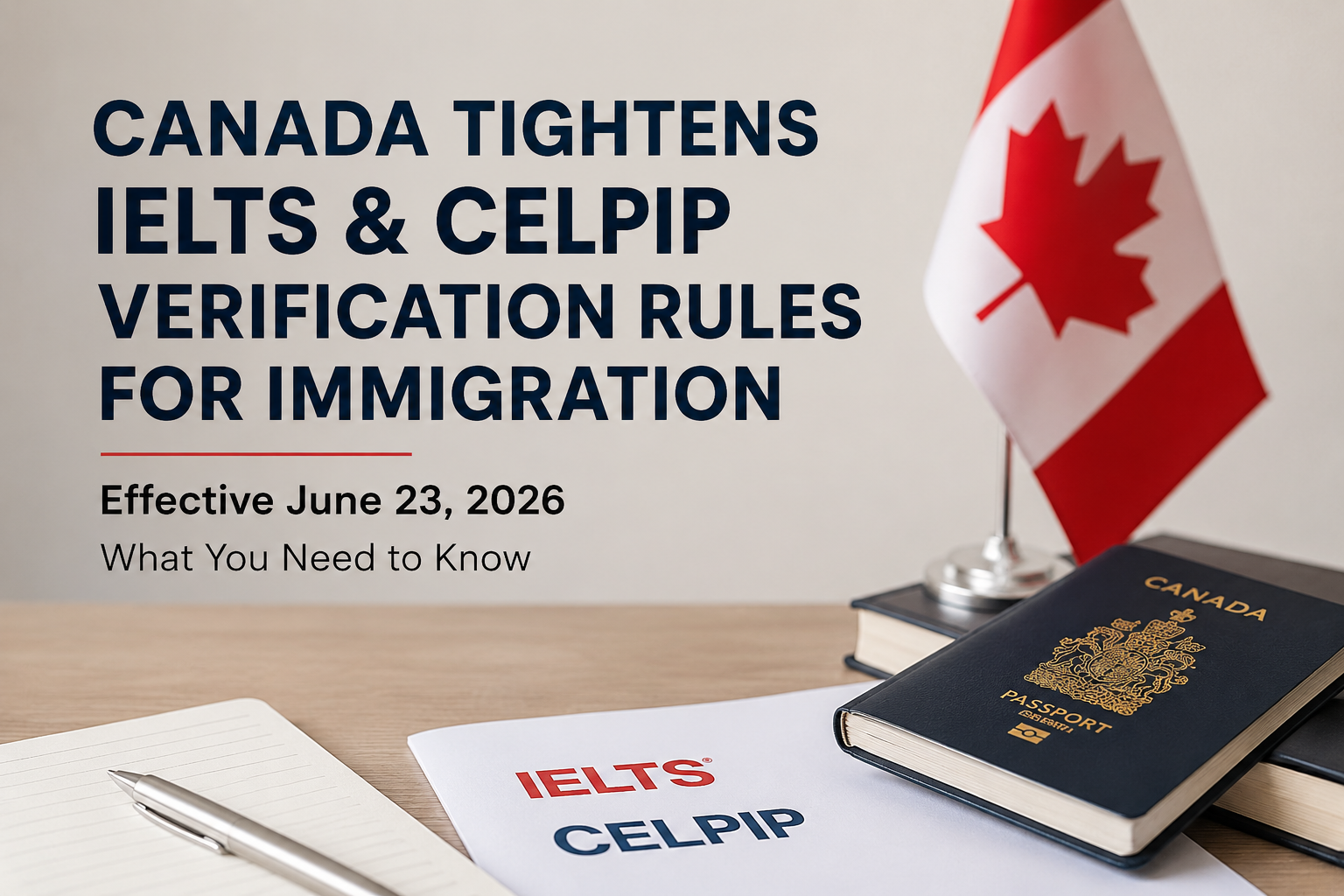
Starting June 23, 2026, Immigration, Refugees and Citizenship Canada (IRCC) has introduced stricter procedures to verify language test results. The new measures are designed to prevent fraud and ensure that every applicant's IELTS, CELPIP, or other approved language test result genuinely belongs to them.
Although this change won't affect honest applicants negatively, it does mean your documents and identity details need to be completely accurate throughout your immigration process.
What Has Changed?
Under the updated IRCC instructions, immigration officers are now required to perform additional verification checks before making a decision on an application.
The biggest changes include:
-
Cross-checking the applicant's photograph with the photo stored in the official language testing records.
-
Reviewing case notes throughout the application process.
-
Monitoring testing-provider Info-Alerts for any suspicious activity.
-
Referring questionable applications to a dedicated fraud investigation unit for further review.
These checks must now take place at every stage of application processing, not just before a final decision.
Why Is Canada Introducing These New Rules?
Language proficiency plays a major role in Canada's immigration system.
Whether you're applying through Express Entry or many Provincial Nominee Programs, your English or French language score directly affects your eligibility and Comprehensive Ranking System (CRS) score.
Because language results have such a significant impact, IRCC is strengthening verification procedures to reduce fraudulent applications and protect the integrity of Canada's immigration system.
Who Will Be Affected?
The updated verification process applies to applicants submitting approved language test results for immigration purposes, including:
-
Express Entry candidates
-
Provincial Nominee Program (PNP) applicants
-
Post-Graduation Work Permit (PGWP) applicants who must provide language test results
-
Other economic immigration streams requiring approved language scores
If you're submitting IELTS General Training, CELPIP-General, or PTE Core for English—or approved French tests such as TEF or TCF—your identity information may be reviewed more carefully during processing.
What Happens if IRCC Finds a Problem?
If immigration officers identify inconsistencies or suspect fraud, they will forward the case to a specialized investigation team for further review.
If misrepresentation is confirmed after the required procedural fairness process, the immigration application may be refused.
One notable change is that the previous guidance allowing some applicants to take a supervised second language test is no longer included in the updated instructions.
How Can You Protect Your Application?
Fortunately, genuine applicants can reduce the risk of unnecessary delays by following a few simple steps.
1. Use Consistent Identity Documents
Ensure that:
-
Your passport
-
Language test registration
-
Immigration application
all contain matching personal information.
2. Check Your Test-Day Photograph
The photograph captured during your IELTS or CELPIP test should clearly match the identity documents you submit to IRCC.
Even significant changes in appearance over time may require additional explanation if requested.
3. Keep All Test Documents
Store copies of:
-
Test registration confirmation
-
Payment receipts
-
Official score report
-
Emails from the testing organization
Having these documents readily available can make responding to requests much easier.
4. Never Use Unauthorized Services
Avoid anyone who promises guaranteed scores, altered results, or shortcuts.
Submitting fraudulent documents can have serious consequences that extend beyond a single application.
What This Means for Genuine Applicants
For most applicants, the new rules shouldn't be a cause for concern.
If you took your language test honestly and your documents are accurate, these additional verification steps are simply part of IRCC's efforts to strengthen the immigration process.
The key is to ensure that all of your personal information is consistent from the day you register for your language test until your immigration application is complete.
How BandLadder Can Help You Prepare
Achieving a strong language score is still one of the most important parts of a successful Canadian immigration application.
BandLadder helps learners prepare with confidence through:
-
AI-powered IELTS and PTE practice
-
Full-length mock tests
-
Speaking and writing evaluations
-
Personalized performance reports
-
Daily practice questions
-
Expert guidance to improve your English skills
Whether you're preparing for IELTS General Training, PTE Core, or another English proficiency exam, BandLadder provides structured practice designed to help you perform at your best.
Start Preparing Today
✅ BandLadder IELTS ₹99 Program
Perfect for learners preparing for Canadian immigration and study abroad.
✅ BandLadder PTE ₹99 Program
Practice with AI-powered scoring, speaking simulations, and full-length mock tests.
✅ BandLadder Focus Batch
Receive expert mentoring, personalized study plans, and detailed feedback to help you reach your target score faster.
Frequently Asked Questions
Are IELTS scores still accepted for Canada immigration?
Yes. IELTS General Training remains one of the approved English language tests accepted for many Canadian immigration programs.
Does this update change the minimum language score required?
No. The June 23, 2026 update focuses on stronger identity verification and fraud detection rather than changing language score requirements.
Should I be worried if my IELTS test was genuine?
No. Honest applicants who submit accurate documents and genuine language test results should simply ensure that all personal information remains consistent throughout their application.
What is the most important thing applicants should do now?
Double-check that the photograph and identity details used during your language test match the documents submitted with your immigration application, and keep copies of all testing records for future reference.
Final Thoughts
Canada's latest verification measures highlight one simple message: accuracy matters.
The stronger checks introduced by IRCC aren't intended to make immigration harder for genuine applicants—they're designed to protect the fairness of the system by identifying fraudulent language test results.
If you're planning to apply for Canadian immigration, take the time to organize your documents carefully, keep complete records, and prepare for your language test through trusted platforms like BandLadder. A genuine score, accurate documentation, and thorough preparation remain the strongest foundation for a successful application.