What Candidates Need to Know Before 27 June 2026
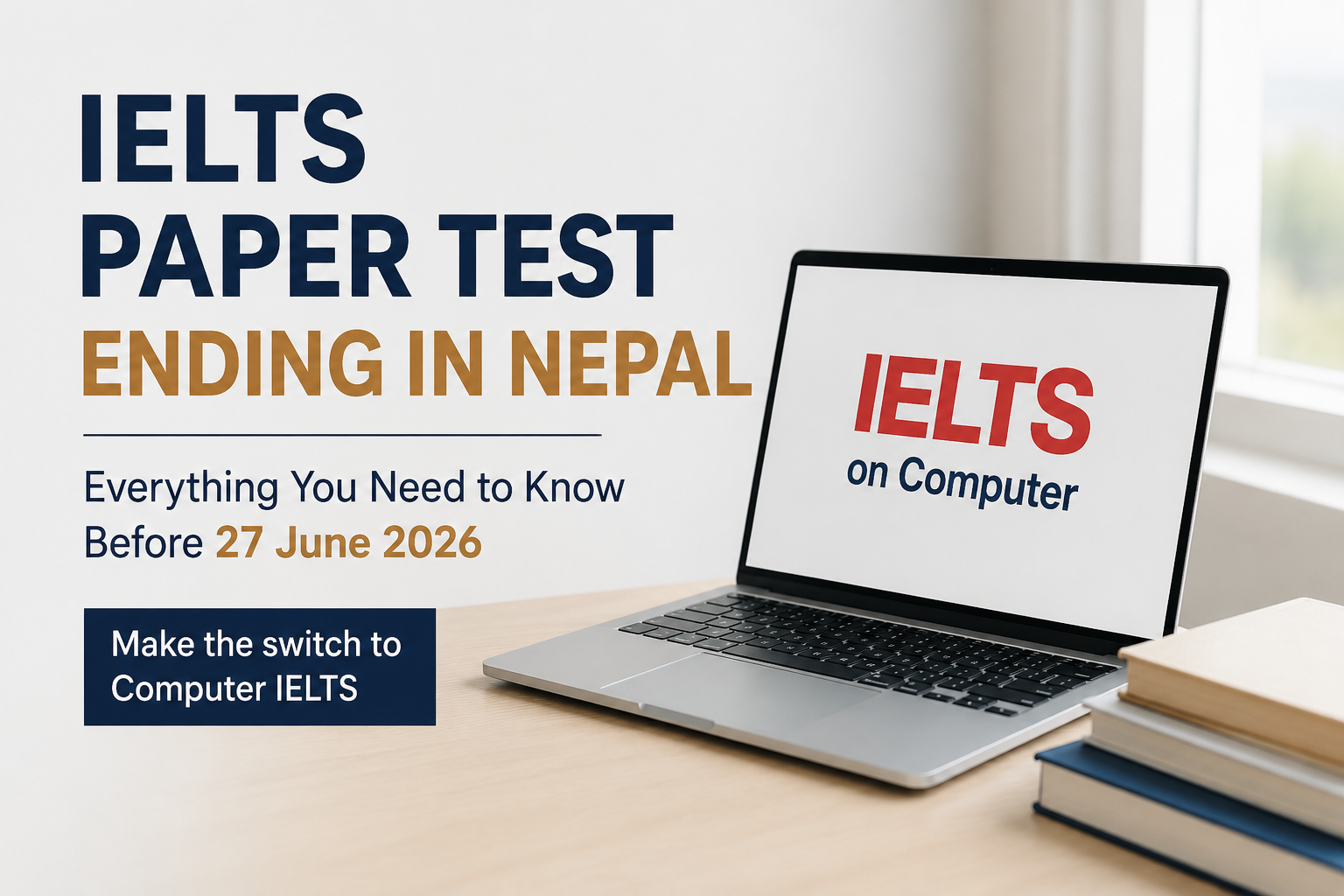
The IELTS landscape in Nepal is changing, and this update is important for every student planning to take the test in 2026. According to IDP IELTS Nepal, the paper-based IELTS test will no longer be offered in Nepal after 27 June 2026. Candidates who still prefer the traditional paper format are now being urged to switch to IELTS on computer before the deadline.
This announcement matters because it affects how thousands of test-takers in Nepal will prepare, book, and take their exam. For many students, IELTS is more than just a test. It is a gateway to university admissions, skilled migration, work opportunities, and higher education abroad. A change in test delivery therefore has a direct impact on preparation strategy, exam comfort, and booking decisions.
What exactly is changing?
The key update is simple: after 27 June 2026, the paper-based IELTS test will no longer be available in Nepal. This means candidates will need to choose IELTS on computer if they plan to take the exam in the country after that date.
This does not mean IELTS itself is disappearing. The test is still available, but the format is shifting away from paper and toward computer-based delivery. For many students, this is part of a wider global move toward digital testing.
Why this matters for IELTS candidates in Nepal
This change is significant for several reasons.
First, students who were comfortable with handwritten answers will now need to adjust to typing their responses. That is especially important for the Writing section, where speed, accuracy, and typing confidence can strongly affect performance.
Second, some candidates may have been planning to book a paper-based exam later in the year. Those students now need to act sooner and choose the computer-based format before the paper option disappears completely.
Third, the shift may also influence preparation methods. Students who have been practicing on notebooks and handwritten answer sheets may need to spend more time practicing on a keyboard, especially for writing tasks, note-taking, and reading on screen.
Paper IELTS versus computer IELTS
Many students still ask whether computer IELTS is harder than paper IELTS. The answer depends on the candidate’s comfort level.
In paper IELTS, test-takers write answers by hand and read from printed question papers. Some students like the familiar feel of paper and the ability to underline, highlight, and work slowly through questions.
In computer IELTS, test-takers type their answers and complete the Reading, Listening, and Writing sections on a screen. The Listening, Reading, and Writing modules are usually finished in one sitting, while Speaking remains face-to-face or online depending on the test center arrangement.
For students who type well, computer IELTS can be faster and more convenient. It also reduces the risk of unreadable handwriting in Writing tasks. However, students who are not used to typing quickly may need time to build confidence.
What students in Nepal should do now
If you are planning to take IELTS in Nepal, this is the right time to prepare strategically.
The first step is to check your target test date. If you are aiming for a date after 27 June 2026, you should assume that the paper-based option will no longer be available and plan for computer IELTS instead.
The second step is to book early. As deadlines approach, computer-based test slots may fill quickly because many students will be shifting formats at the same time.
The third step is to start practicing digitally. This means doing Writing tasks on a keyboard, reading passages on a screen, and taking mock tests in a computer-based environment.
The fourth step is to review your weak areas. If your typing speed is slow, work on it daily. If you struggle with time management, practice full-length mock tests under exam conditions.
How to prepare for IELTS on computer
Switching to computer IELTS is not just about changing the device. It also changes the way you manage time and attention.
For Writing Task 1 and Task 2, practice typing without looking at the keyboard too much. Focus on building both speed and accuracy. The more naturally you can type, the more mental energy you can devote to grammar, vocabulary, and structure.
For Reading, get comfortable with scrolling, screen scanning, and moving between questions on a digital interface. Some students find screen reading slightly tiring at first, so regular practice is helpful.
For Listening, train yourself to use on-screen note space efficiently. Since the audio plays only once, staying organized is extremely important.
For Speaking, nothing changes in the format itself, but the pressure of adapting to a new test delivery may affect confidence. The best solution is regular mock speaking practice with real-time feedback.
Common mistakes students may make during this transition
One of the biggest mistakes is delaying the decision. Some students continue assuming paper IELTS will still be available later, and by the time they check, the deadline has passed.
Another mistake is failing to adapt practice habits. A student may still prepare only with printed books and handwritten essays even though the real test will be computer-based. That creates a gap between practice and actual exam conditions.
A third mistake is underestimating typing speed. Even strong English students can lose marks indirectly if they spend too much time typing and do not leave enough time for editing.
A fourth mistake is not reading official updates carefully. Test policies can change, so students should always confirm details through the official test provider before making final bookings.
What this means for future IELTS trends
The Nepal update is part of a larger global pattern. More exam systems are moving toward digital delivery because it is faster to process, easier to administer, and more convenient for many candidates.
For IELTS students, this means digital readiness is becoming just as important as English proficiency. In the future, success in IELTS may depend not only on vocabulary, grammar, and fluency, but also on how comfortably a student can work in a computer-based test environment.
This is especially true for students who plan to study abroad, because many universities and immigration systems now expect applicants to be adaptable, tech-comfortable, and able to work in digital academic settings.
Helpful tips before the deadline
If you are in Nepal and planning to take IELTS soon, keep these points in mind.
Book early if you still want to secure a slot before the paper-based option ends.
Choose computer IELTS if your typing speed is already reasonably strong.
Practice at least several full mock tests on screen before test day.
Check the official IDP Nepal announcements regularly so that you do not miss any last-minute booking changes.
Build a study plan that includes both English skills and test-format practice.
FAQs
Is paper IELTS completely ending in Nepal?
According to the update, paper-based IELTS will no longer be offered in Nepal after 27 June 2026.
Should I switch to IELTS on computer?
Yes, if you plan to take the test in Nepal after the deadline, computer IELTS is the format you should prepare for.
Will the IELTS score be different on computer?
The scoring criteria remain the same. The change is in delivery format, not in the core assessment standards.
Is computer IELTS easier than paper IELTS?
It depends on the candidate. Students who type well may find it easier, while those who prefer handwriting may need adjustment time.
What is the most important thing to do now?
Check your test date, book early, and start practicing in a computer-based format.
Conclusion
The end of paper-based IELTS in Nepal after 27 June 2026 marks an important shift for test-takers. While the core IELTS exam remains the same, students must now adapt to a computer-based format and prepare accordingly.
For candidates, the message is clear: do not wait until the deadline passes. Review your timeline, choose your format wisely, and begin practicing on a computer as soon as possible. Those who adapt early will have a much smoother exam experience and a better chance of achieving their target band score.
The change may feel sudden, but for students who prepare properly, it can also be an opportunity. With the right practice, computer IELTS can be efficient, modern, and manageable.