Everything Test Takers Need to Know
Planning to study, work, or migrate abroad in 2026?
If you're preparing for the IELTS or PTE Academic, it's important to stay updated because the English language testing landscape is changing faster than ever. Testing organizations are introducing new exam formats, strengthening security measures, and discouraging memorized responses, while governments are tightening English language requirements for immigration.
These changes could directly impact how you prepare for your exam—and, in some cases, your visa or permanent residency application.
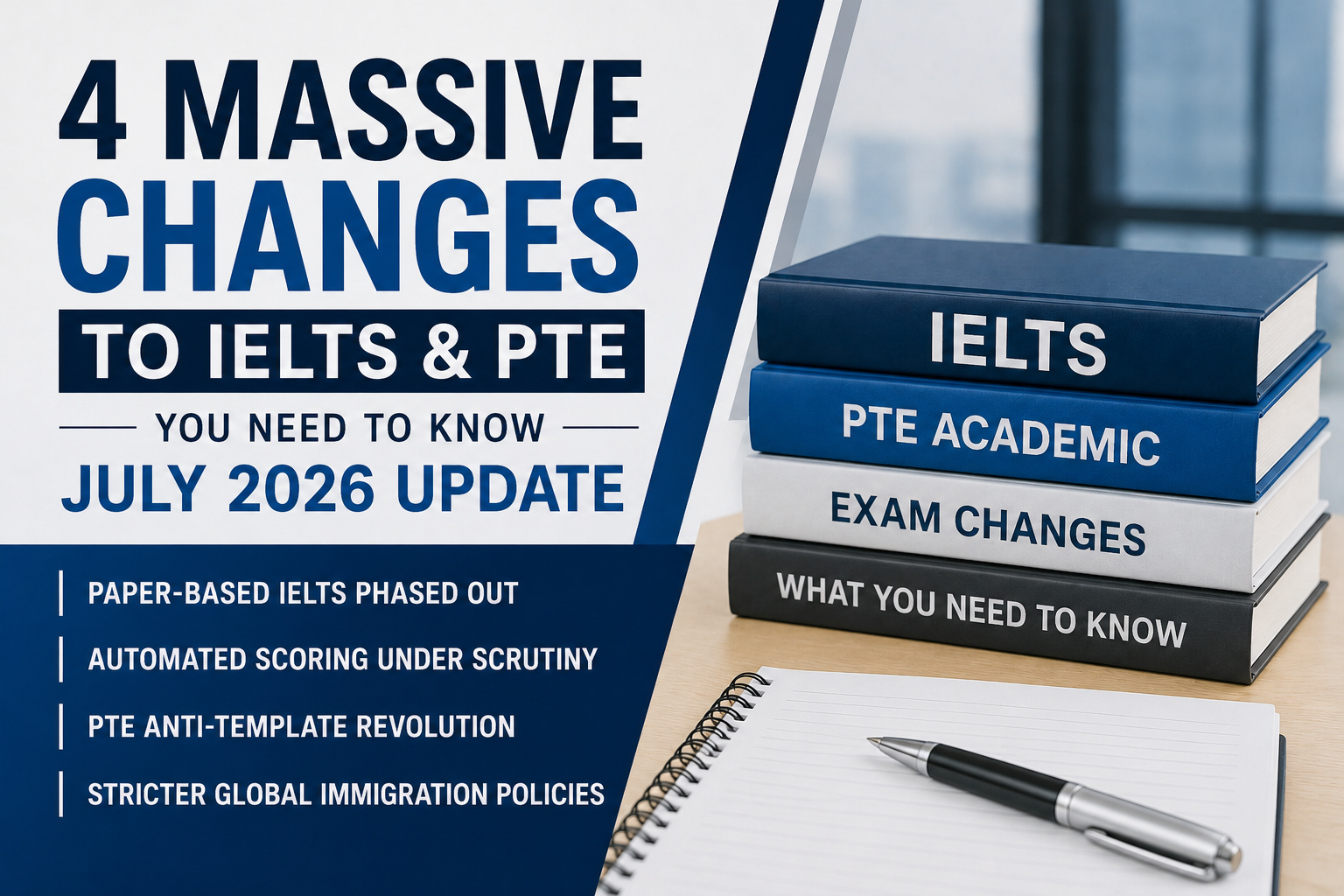
Here's a breakdown of the four biggest IELTS and PTE updates in July 2026 and what they mean for you.
1. Paper-Based IELTS Is Being Phased Out
One of the biggest changes in 2026 is the gradual transition away from traditional paper-based IELTS exams.
The IELTS partners are expanding computer-delivered testing across most countries, making it the primary way candidates take the exam.
Although some locations may continue offering limited paper-writing options for candidates who prefer handwriting, computer-based testing is becoming the standard.
For candidates applying through UK Visas and Immigration (UKVI), computer-delivered IELTS has become the required format in many testing locations.
What This Means for You
If you're planning to take IELTS in 2026:
-
Become comfortable typing essays.
-
Practice computer-based Reading and Listening tests.
-
Improve your keyboard speed and time management.
-
Familiarize yourself with the digital test interface before exam day.
Preparing on a computer instead of paper can make a noticeable difference in your confidence and performance.
2. Automated Scoring Is Under Greater Scrutiny
Another major development has placed automated assessment systems under the spotlight.
Recent regulatory action involving automated marking errors highlighted the importance of maintaining accurate and reliable scoring systems for high-stakes English language exams.
The incident reinforced the need for stronger quality assurance and continuous monitoring of technology used in language testing.
Why This Matters
Candidates should remember that exam providers continually review and improve their scoring systems to maintain fairness.
Rather than worrying about AI scoring, your focus should remain on:
-
Clear communication
-
Accurate grammar
-
Strong vocabulary
-
Logical organization
-
Natural language use
These remain the key factors that contribute to high scores.
3. PTE Is Moving Away from Memorized Templates
For years, many candidates relied on memorized templates to maximize their PTE scores.
That strategy is becoming much less effective.
Recent updates have introduced more spontaneous speaking and writing tasks designed to evaluate genuine language ability rather than rehearsed responses.
At the same time, scoring systems continue evolving to identify responses that appear repetitive or overly scripted.
How Should You Prepare?
Instead of memorizing fixed answers:
-
Build topic-specific vocabulary.
-
Improve your fluency.
-
Practice speaking naturally.
-
Learn flexible sentence structures.
-
Focus on communicating ideas clearly.
Candidates who understand English rather than memorize scripts are better positioned for long-term success.
4. Immigration Policies Are Becoming More Strict
The evolution of IELTS and PTE reflects broader changes in global immigration policies.
Many countries are placing greater emphasis on demonstrating real English communication skills for study, work, and migration pathways.
Recent policy developments continue to highlight the importance of achieving competitive language scores.
Countries such as:
-
Australia
-
United Kingdom
-
Canada
-
New Zealand
continue to review and update English language requirements across various visa categories.
For applicants, strong English proficiency remains one of the most valuable factors in improving visa eligibility and immigration competitiveness.
What These Changes Mean for IELTS and PTE Students
Although these updates may seem overwhelming, they all point toward the same message:
Authentic communication matters more than memorization.
Whether you're taking IELTS or PTE, examiners and scoring systems increasingly reward candidates who can:
-
Express ideas naturally.
-
Use vocabulary appropriately.
-
Think critically.
-
Respond confidently.
-
Demonstrate genuine English proficiency.
Shortcuts and memorized templates are becoming less reliable every year.
How to Prepare Smarter in 2026
To stay ahead of the latest exam trends, focus your preparation on these key areas:
Practice Real Communication
Have conversations, answer random questions, and explain your opinions naturally.
Improve Vocabulary in Context
Learn collocations and topic-specific vocabulary instead of isolated word lists.
Practice Computer-Based Exams
Become familiar with digital interfaces, timers, and on-screen navigation.
Strengthen Your Grammar
Accurate grammar remains essential for both IELTS and PTE Writing and Speaking.
Stay Updated
Follow official announcements from testing organizations instead of relying on social media rumours or unverified "prediction" posts.
Final Thoughts
The IELTS and PTE exams are evolving to better measure practical English communication skills rather than memorized knowledge.
The move toward computer-delivered testing, ongoing improvements to scoring systems, greater emphasis on spontaneous responses, and changing immigration policies all reflect the same goal: ensuring candidates can communicate effectively in real-world situations.
If you're preparing for IELTS or PTE in 2026, your best strategy is simple—focus on building genuine language skills, practice consistently, and stay informed through official updates.
The candidates who adapt to these changes won't just perform better in the exam—they'll also be better prepared for studying, working, and living in an English-speaking environment.