How to Build an English-Speaking Habit When You Have No One to Practice With
Many students preparing for IELTS, PTE, university interviews, and study-abroad applications face the same challenge:
"I want to improve my spoken English, but I don't have anyone to practice with."
The good news is that modern language learning methods and AI-powered platforms have made solo speaking practice more effective than ever before.
Whether you are preparing for a PTE Speaking section, an IELTS interview, or simply want more confidence when communicating abroad, this guide will show you how to build a consistent English-speaking habit—even when you're studying alone.
Why Is It So Hard to Practice English Alone?
Most learners focus heavily on reading and listening because these activities feel easier and more comfortable.
Speaking is different because it requires:
-
Real-time thinking
-
Vocabulary recall
-
Pronunciation control
-
Confidence under pressure
Without regular speaking practice, students often understand English well but struggle to express themselves fluently.
This gap becomes obvious during:
-
PTE Speaking tasks
-
IELTS Speaking interviews
-
University admission interviews
-
Visa interviews
-
Classroom discussions abroad
Can You Really Improve Speaking Without a Partner?
Yes.
Research and language-learning experts agree that speaking improvement comes from active language production, not just conversations.
You can improve fluency by:
-
Speaking to yourself
-
Recording responses
-
Shadowing native speakers
-
Using AI conversation tools
-
Practicing exam-style questions
Many high-scoring IELTS and PTE candidates spend a significant portion of their preparation practicing independently.
What Is the 15-Minute Daily Speaking Method?
Consistency matters more than long study sessions.
Try this simple routine:
Minute 1–3: Read Aloud
Choose a short article or news story.
Focus on:
-
Pronunciation
-
Intonation
-
Natural rhythm
Minute 4–8: Speak About Your Day
Answer questions such as:
-
What did I do today?
-
What am I planning tomorrow?
-
What challenge did I face this week?
Speak continuously without worrying about mistakes.
Minute 9–12: Record Yourself
Pick an IELTS or PTE topic and record a response.
Examples:
-
Describe your hometown.
-
Talk about a memorable teacher.
-
Explain an important decision.
Minute 13–15: Review
Listen to your recording and note:
-
Repeated words
-
Grammar mistakes
-
Pronunciation issues
-
Long pauses
This simple habit creates measurable improvement within weeks.
How Can AI Help You Practice English Conversations?
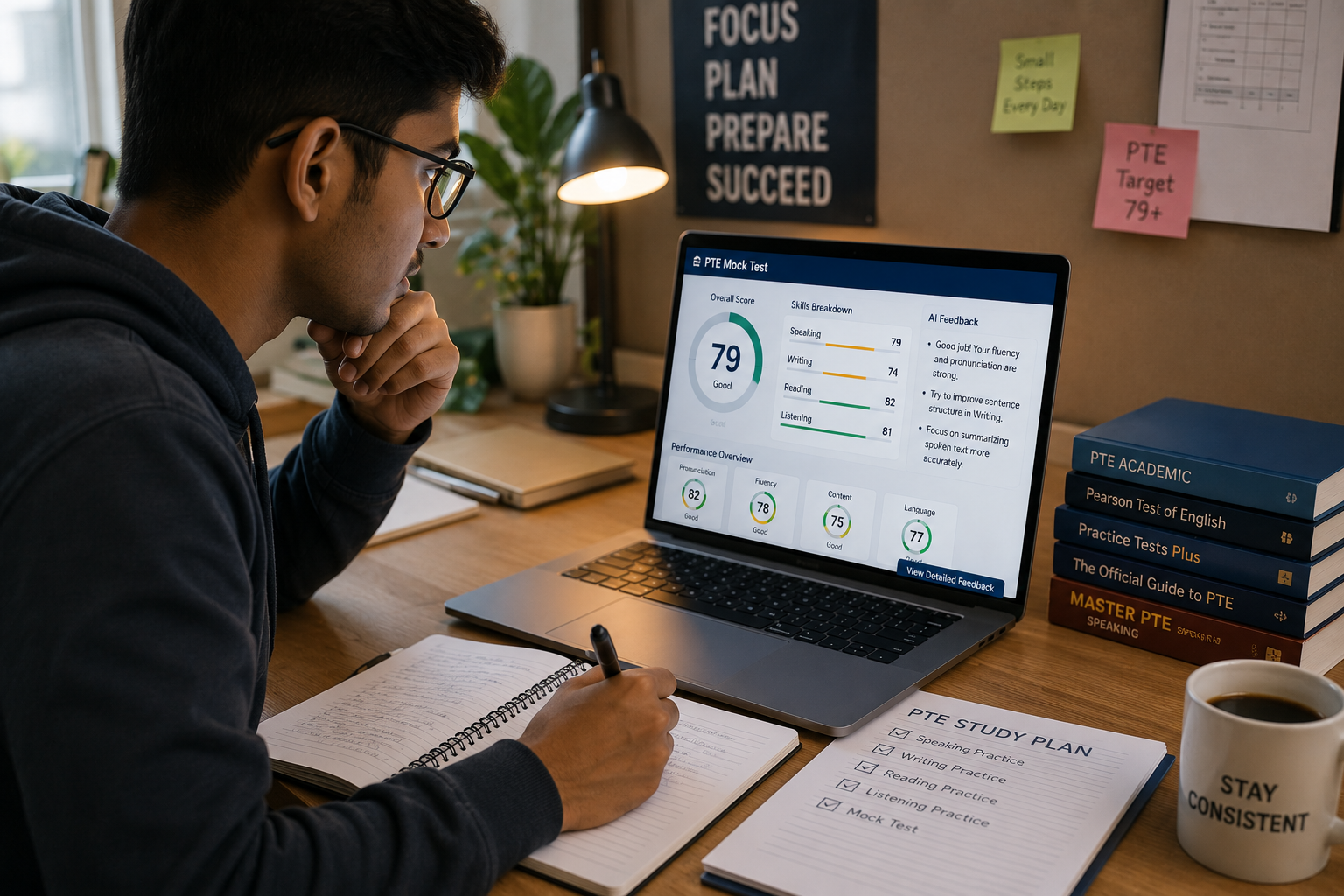
AI tools have changed the way students prepare for English proficiency exams.
Today, learners can:
-
Simulate conversations
-
Receive pronunciation feedback
-
Practice speaking questions
-
Track fluency improvement
-
Get instant corrections
For study-abroad applicants, AI provides a safe environment to practice without fear of judgment.
Platforms such as BandLadder can help students create daily speaking routines while receiving structured feedback.
Which Speaking Activities Improve Fluency Fast?
Shadowing
Listen to a native speaker and repeat immediately.
Benefits:
-
Better pronunciation
-
Improved rhythm
-
Faster speaking speed
Picture Description
Describe an image in detail.
Useful for:
-
PTE Describe Image
-
IELTS Speaking
-
Academic communication
Story Retelling
Listen to a short audio clip and summarize it.
This improves:
-
Listening
-
Vocabulary
-
Speaking confidence
Topic Expansion
Choose one word and speak about it for one minute.
Example:
"Technology"
Discuss:
-
Advantages
-
Disadvantages
-
Personal experiences
-
Future trends
Common Mistakes Students Make
Waiting Until They Feel Ready
Confidence comes after practice, not before it.
Memorizing Answers
Examiners can easily recognize memorized responses.
Focus on communication rather than perfect scripts.
Practicing Only Before Exams
Speaking is a skill that requires daily repetition.
Ignoring Feedback
Recording and reviewing your speech is one of the fastest ways to improve.
A 30-Day English Speaking Habit Plan
Week 1
-
Read aloud daily
-
Record one-minute responses
Week 2
-
Start shadowing exercises
-
Practice common IELTS and PTE topics
Week 3
-
Use AI conversation practice
-
Increase speaking time to three minutes
Week 4
-
Complete full mock speaking sessions
-
Review progress and identify weak areas
By the end of 30 days, most learners notice improvements in fluency, confidence, and vocabulary usage.
Conclusion
You do not need a speaking partner to become a confident English speaker.
With a structured routine, AI-powered practice, and consistent daily effort, you can significantly improve your communication skills for IELTS, PTE, university admissions, and life abroad.
The key is simple: speak every day, record your progress, and focus on gradual improvement.
Frequently Asked Questions
How can I practice English speaking alone every day?
Use a combination of self-talk, recording responses, shadowing, and AI conversation tools for at least 15 minutes daily.
Is AI useful for IELTS and PTE speaking preparation?
Yes. AI can provide instant feedback, simulate conversations, and help identify pronunciation and fluency issues.
How long does it take to improve spoken English?
Most learners notice measurable improvements within 30 to 60 days of consistent speaking practice.
What is the best speaking exercise for beginners?
Reading aloud and describing daily activities are among the easiest and most effective starting points.
Can I become fluent without joining a speaking class?
Yes. Many learners achieve strong speaking skills through self-practice, structured routines, and AI-assisted learning.