30-Day PTE Speaking Improvement Plan with AI Feedback: A Step-by-Step Guide for Study Abroad Aspirants
Many students preparing for study abroad opportunities struggle with one section of the PTE exam more than any other: Speaking.
The challenge isn't just speaking English. It's speaking clearly, fluently, confidently, and within the scoring criteria used by Pearson's AI-driven assessment system.
The good news?
A focused 30-day strategy combined with AI-powered feedback can significantly improve your speaking performance.
This guide provides a complete month-long roadmap designed for students targeting higher PTE scores for university admissions, visas, professional registration, and migration pathways.
Why PTE Speaking Matters More Than Ever
PTE Speaking contributes directly and indirectly to multiple sections of the exam.
Strong speaking performance can positively impact:
- Speaking scores
- Listening scores
- Overall communicative skills
- Integrated task performance
Since the exam uses automated scoring technology, consistency becomes extremely important. Even minor pronunciation, fluency, or hesitation issues can affect results.
This is why modern preparation increasingly relies on AI-based practice systems that simulate real exam evaluation.
Can You Really Improve PTE Speaking in 30 Days?
Yes—if you focus on the right activities.
Most candidates waste time memorizing templates without addressing core weaknesses.
The biggest score improvements usually come from:
✅ Better fluency
✅ Improved pronunciation
✅ Reduced hesitation
✅ Stronger sentence structure
✅ Consistent practice under timed conditions
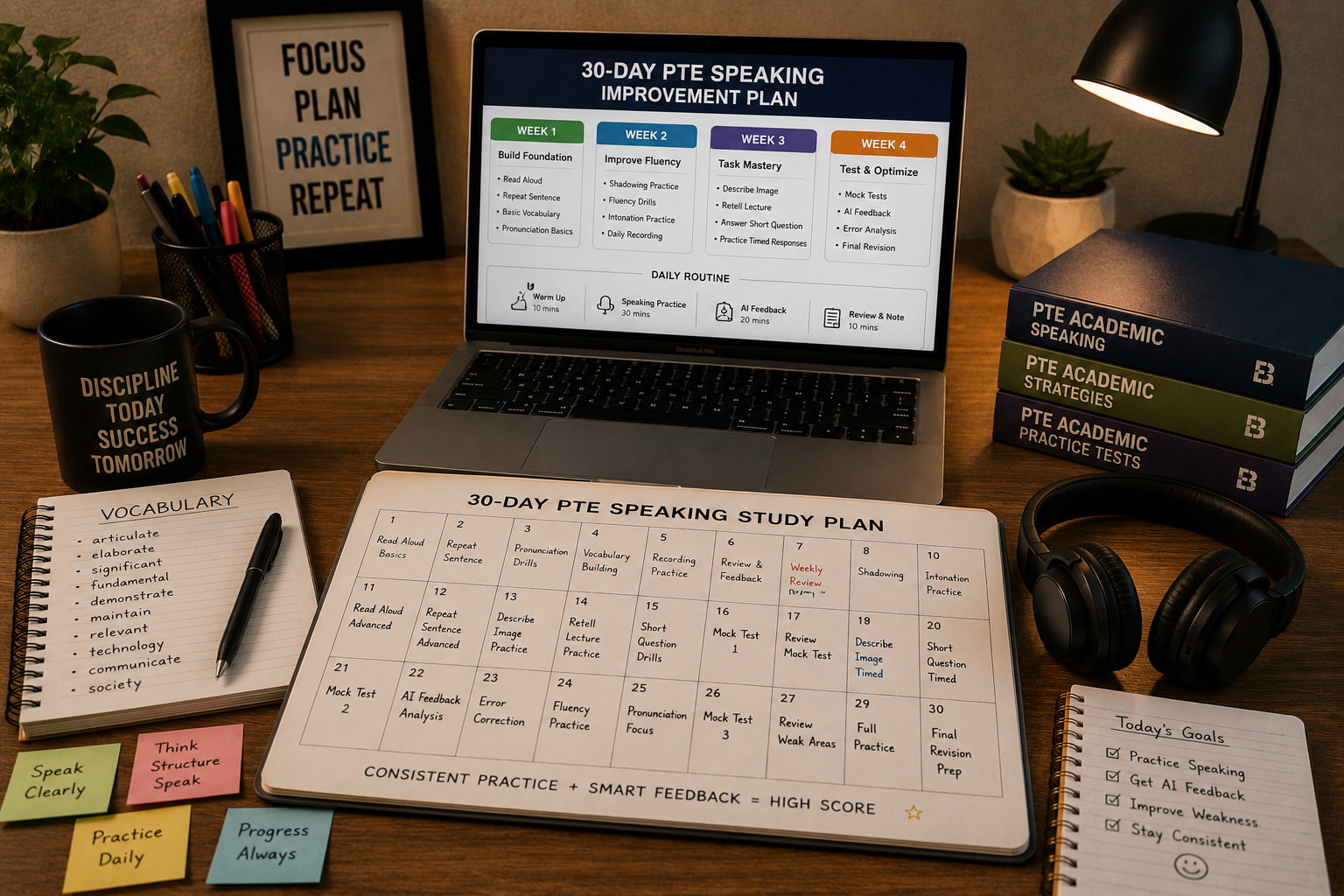
A structured 30-day plan helps build these skills progressively.
What Role Does AI Feedback Play in Faster Improvement?
Traditional learning often depends on teachers, classmates, or self-evaluation.
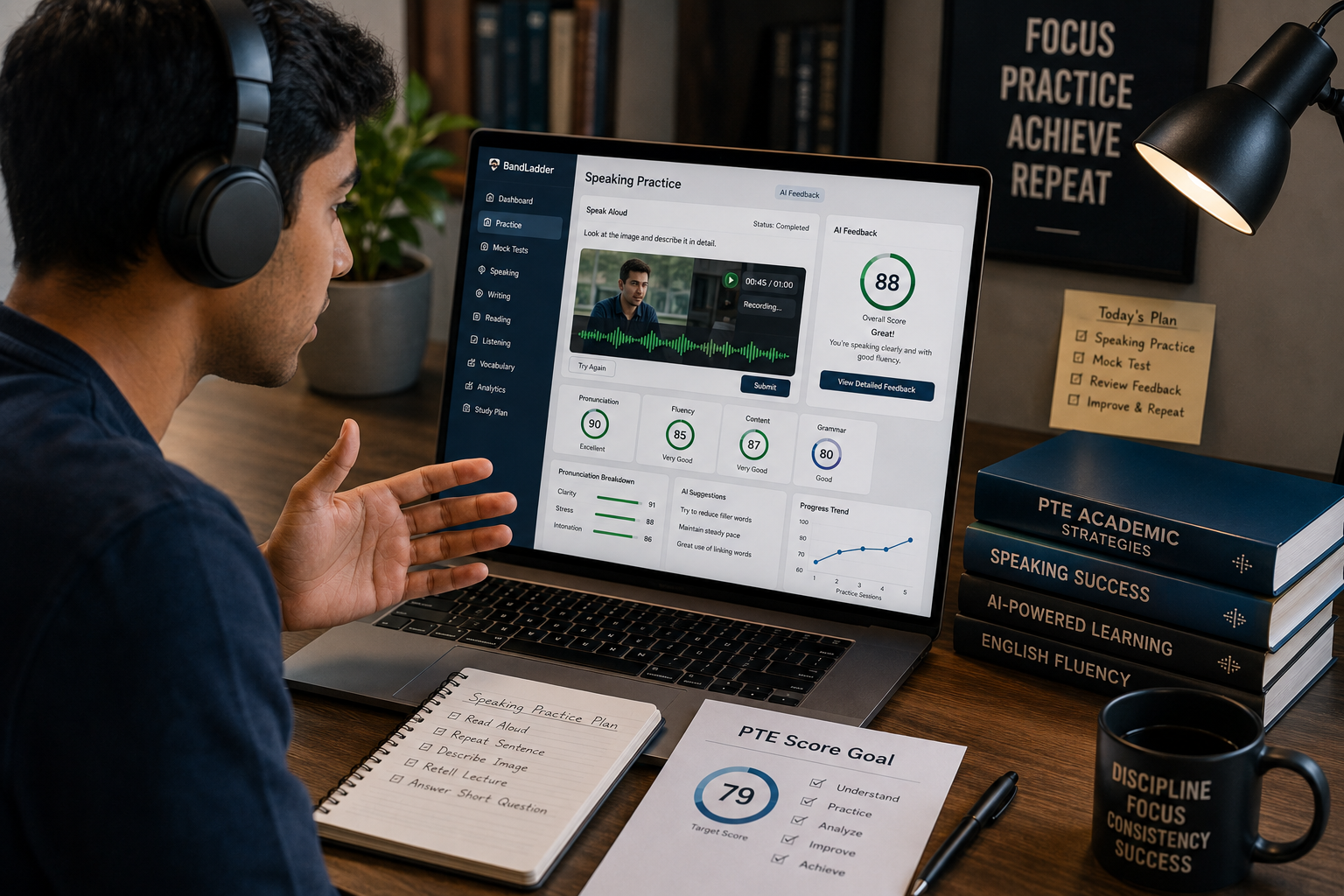
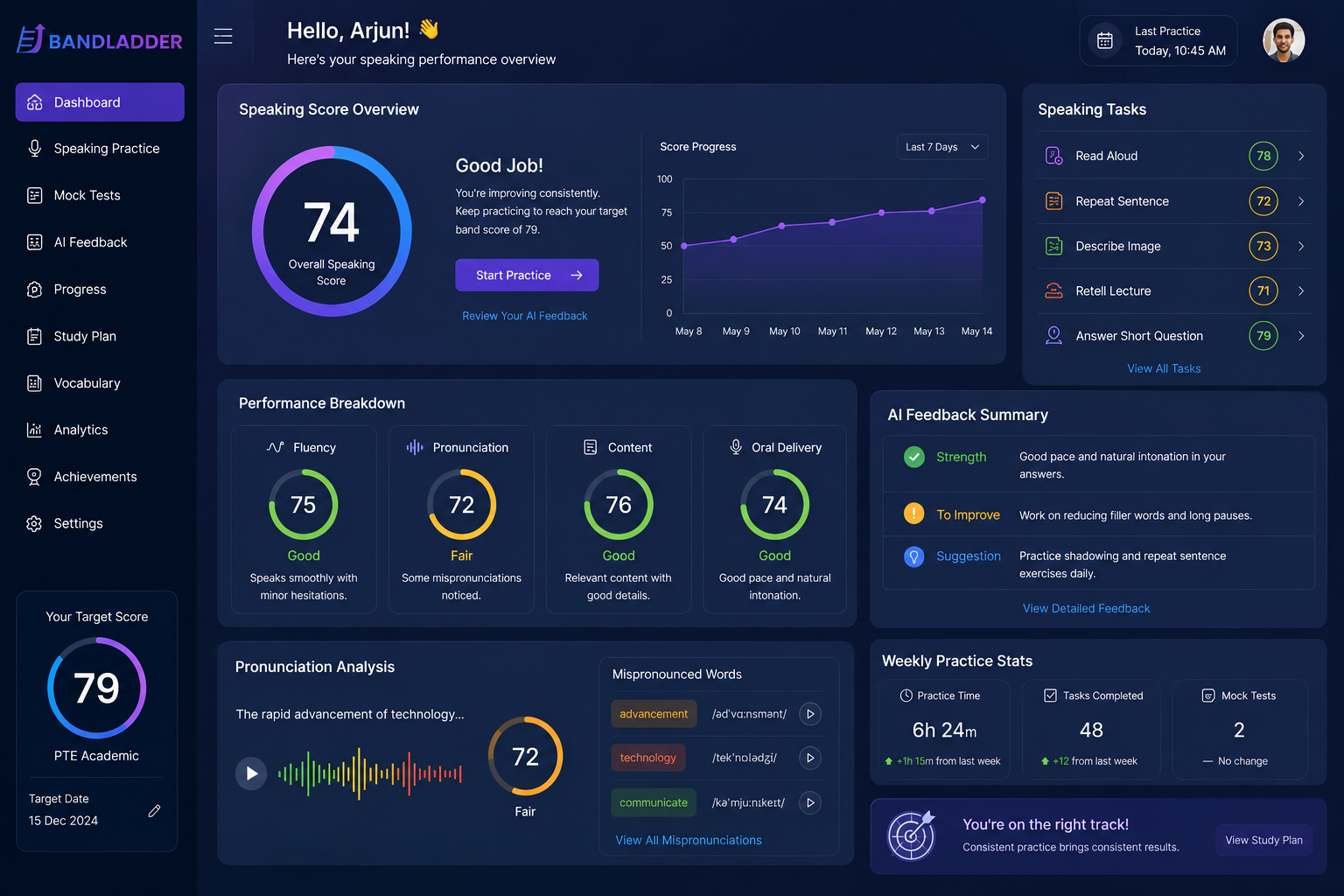
AI-powered learning platforms provide advantages such as:
- Instant pronunciation analysis
- Fluency tracking
- Speaking speed measurement
- Performance analytics
- Detailed error identification
- Personalized improvement suggestions
Instead of guessing what's wrong, students receive objective feedback after every practice session.
This makes preparation more efficient and measurable.
Week 1: Build Your Foundation
Goal:
Understand your current level and identify weaknesses.
Daily Tasks
Day 1–2
Take a diagnostic mock test.
Track:
- Fluency
- Pronunciation
- Vocabulary
- Speaking confidence
Day 3–4
Practice:
- Read Aloud
- Repeat Sentence
Focus on:
- Clear pronunciation
- Natural pace
- Avoiding pauses
Day 5–6
Record yourself reading news articles and academic content.
Compare:
- Speed
- Clarity
- Confidence
Day 7
Review analytics and identify recurring errors.
Expected Outcome
By the end of Week 1, you should understand:
- Your baseline score
- Strongest skills
- Weakest speaking areas
Week 2: Improve Fluency and Pronunciation
Goal:
Reduce hesitation and improve speech flow.
Daily Practice Routine
15 Minutes
Read Aloud practice
20 Minutes
Repeat Sentence exercises
15 Minutes
Shadowing technique
Listen and immediately repeat native English audio.
10 Minutes
Pronunciation correction using AI feedback
Focus Areas
- Word stress
- Sentence rhythm
- Intonation
- Linking sounds
Pro Tip
Do not aim for a foreign accent.
Aim for:
- Clarity
- Consistency
- Understandability
These factors matter more for scoring.
Week 3: Master High-Scoring Speaking Tasks
Goal:
Develop exam-specific strategies.
Describe Image
Learn to:
- Identify trends quickly
- Use structured templates
- Speak continuously for 30–40 seconds
Retell Lecture
Focus on:
- Key ideas
- Main concepts
- Logical sequencing
Answer Short Question
Practice:
- Common vocabulary
- Everyday knowledge
- Fast responses
Daily Target
Complete:
- 10 Read Alouds
- 10 Repeat Sentences
- 5 Describe Images
- 5 Retell Lectures
- 20 Short Questions
Week 4: Mock Tests and Performance Optimization
Goal:
Simulate real exam conditions.
Complete
- 3 Full Mock Tests
- 2 Speaking-Only Mock Sessions
- Daily AI Performance Review
Analyze
Look for:
- Hesitation patterns
- Mispronounced words
- Task completion issues
- Time management problems
Improvement Strategy
Spend 80% of revision time on weaknesses and only 20% on strengths.
This approach produces faster score gains.
Common Mistakes That Keep Scores Stuck
Many candidates plateau because they:
Speak Too Fast
Fast speech often reduces clarity.
Memorize Templates Blindly
Templates help structure responses but cannot replace communication skills.
Ignore Pronunciation
Pronunciation directly influences AI scoring.
Avoid Mock Tests
Practice without testing creates a false sense of progress.
Never Review Analytics
Improvement happens when mistakes are measured and corrected.
How Study Abroad Aspirants Can Benefit from AI-Based Practice
Students applying to universities in countries like:
- Australia
- Canada
- United Kingdom
- New Zealand
- Ireland
often face strict English language requirements.
AI-powered preparation helps by:
- Providing flexible practice schedules
- Offering instant feedback
- Tracking score progression
- Building confidence before the actual test
For busy students balancing academics, work, and applications, AI-driven learning can make preparation significantly more efficient.
Final 7-Day Revision Strategy
Days 1–3
Focus on:
- Repeat Sentence
- Read Aloud
Days 4–5
Practice:
- Describe Image
- Retell Lecture
Day 6
Full mock test
Day 7
Light revision only
Avoid:
- Learning new templates
- Over-practicing
- Studying late at night
The goal is confidence and consistency.
Frequently Asked Questions
How much can I improve my PTE Speaking score in 30 days?
Many candidates improve by 5–15 points with focused practice, consistent feedback, and regular mock testing.
Is AI feedback accurate for PTE Speaking preparation?
Modern AI-based platforms can effectively identify pronunciation, fluency, pacing, and speaking patterns, making them valuable preparation tools.
Which speaking task should I practice the most?
Repeat Sentence and Read Aloud are often considered high-impact tasks because they influence multiple scoring components.
How many hours should I study daily?
Most students benefit from 60–90 minutes of focused speaking practice each day.
Can beginners follow this plan?
Yes. The plan starts with foundational skills and gradually moves toward advanced exam-specific strategies.
Conclusion
Improving your PTE Speaking score isn't about studying harder—it's about practicing smarter.
A structured 30-day plan combined with AI-powered feedback allows you to identify weaknesses quickly, track measurable progress, and develop the confidence needed to perform well on test day.
Whether your goal is university admission, migration, or professional registration, consistent daily practice and data-driven improvement can help you move closer to your target score.
Start today, stay consistent, and let every practice session bring you one step closer to your study abroad dream.